

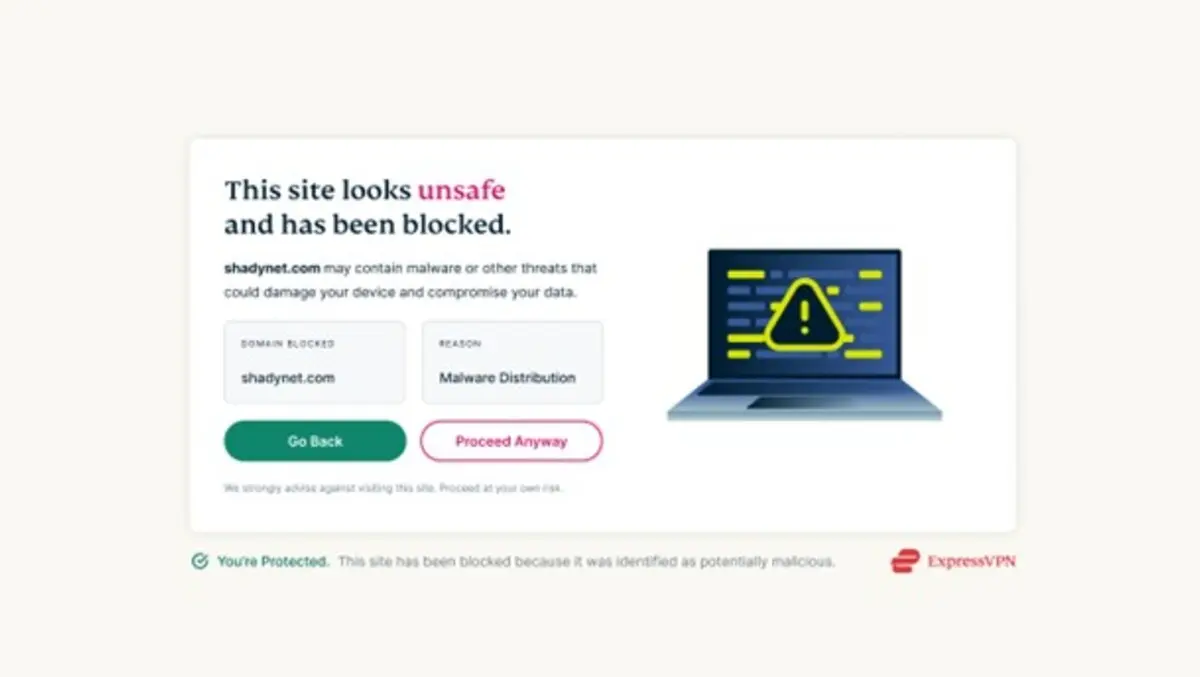

ExpressVPN has added Web Protection to its browser extension. The feature blocks known malicious, phishing and scam websites in real time, even when the VPN is not connected.
It is available at no extra cost to subscribers on the company's Basic, Advanced and Pro plans, as well as to users of ExpressVPN for Teams.
Web Protection works inside the browser rather than at network level. This lets it inspect the full web address of a page, so it can stop a specific harmful page or script without blocking the rest of a legitimate site on the same domain.
That differs from DNS-based blocking tools, which typically operate at domain level and may have to block an entire site to prevent access to one malicious page. As a result, Web Protection can apply narrower filtering within a browser session.
Users who hit a blocked page will see a message explaining what has been stopped and why. The extension also lets users create their own block and allow lists for domains they want to manage directly.
The feature works whether or not the user is connected to the VPN and is available on Chrome, Firefox, Edge, Brave and other Chromium-based browsers. It can be switched on alongside other browser-based controls, including Threat Manager, Ad Blocker and Parental Controls.
Browser focus
The launch reflects a wider focus on threats that appear during everyday browsing, where links in search results, adverts or messages can send users to fake login pages or scam storefronts. Such pages often closely mimic legitimate websites and may only be live for a short time.
The tool checks pages as they begin to load against updated lists of known malicious, phishing and scam sites. If it finds a match, the page does not open and the browser displays a warning screen instead.
ExpressVPN is positioning the feature alongside its existing Advanced Protection service. That product operates inside the VPN tunnel at device level and covers traffic across apps and services, but it requires the VPN to be active and blocks at domain level.
Web Protection, by contrast, stays within the browser and continues to operate without an active VPN connection. It also gives users visible feedback when a site is blocked, rather than running silently in the background.
Extension strategy
The feature builds on the hybrid browser extension that ExpressVPN introduced earlier this year. The extension combines proxy mode, which protects browser traffic without the desktop app installed, with a remote control mode linked to the desktop VPN app for device-wide protection.
It also includes Smart Routing, which lets users direct specific websites or sites from a chosen country through different VPN locations automatically. Other privacy settings include WebRTC leak protection and HTML5 geolocation spoofing.
Web Protection works in both extension modes. Users can also view how many items have been blocked through their ExpressVPN+ account portal, while the extension home screen shows a weekly count.
The rollout comes as VPN providers and privacy software groups broaden their browser-based offerings beyond encrypted connections alone. For ExpressVPN, the addition strengthens a product set that now spans password management, identity protection and privacy tools alongside its core VPN service.
Founded in 2009, the company says it serves millions of users worldwide and has been part of Kape Technologies since 2021.