

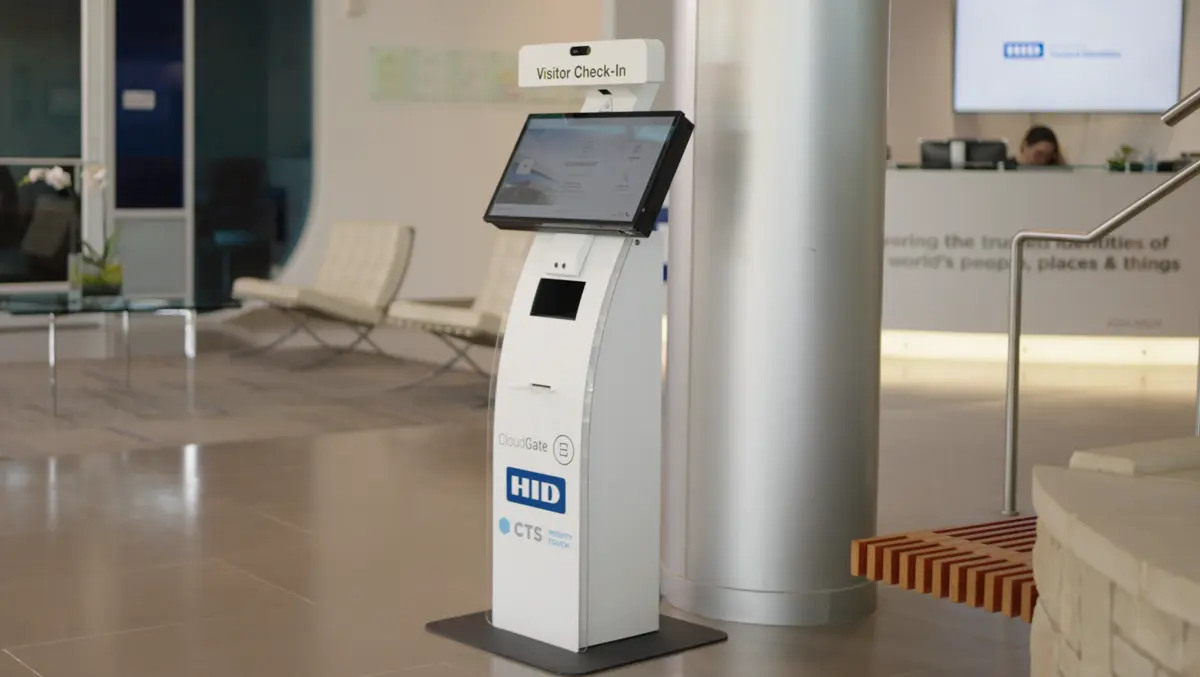

HID, Soloinsight and Connected Technology Solutions have launched an integrated self-service visitor check-in kiosk for global enterprises and critical infrastructure sites.
The kiosk combines HID's ATOM document reader and U.ARE.U facial recognition module with Soloinsight's CloudGate visitor management and Physical Identity and Access Management platform. It is designed to verify a visitor's identity before access credentials are issued.
The launch targets a common weakness in reception and visitor handling across large facilities. In many workplaces, hospitals, data centres and logistics hubs, visitors and contractors can check in by providing only a name or showing an identity document that front-desk staff may have limited ability to authenticate.
That gap can leave organisations exposed to unauthorised access, incomplete audit trails after incidents and compliance issues where operators must show who entered a site and when. The integrated kiosk is intended to create a standardised, auditable process across the visitor journey.
How it works
Under the process outlined by the companies, a host first pre-registers a visitor in CloudGate. The system then sends the visitor an email invitation with a QR code.
At the kiosk, the visitor scans the code and completes an identity check using the HID ATOM document scanner, which can read passports, driving licences and mobile IDs.
The facial recognition step uses the HID U.ARE.U Face Module. The companies said it performs live face verification and rejects scans when the face does not match the identity document or when the system does not detect a live face.
Once the identity check is complete, CloudGate confirms the check-in, the kiosk prints a visitor pass and the host receives a notification. Returning visitors may also be allowed to check in without a host where a site permits that approach.
Each completed transaction is logged in a central visitor record within CloudGate, giving security teams a full history of visitor activity for reporting, investigations and regulatory compliance.
Identity checks
A central part of the offering is HID's use of dedicated hardware rather than a smartphone camera for document capture. The companies argued that phone cameras can be affected by lighting, may struggle to read embedded security features and can be more prone to false reads or acceptance of fake documents.
HID said the ATOM reader captures encoded data from passports and identity cards, including barcodes and RFID or NFC chips, while also checking document integrity features. This is intended to deliver a more consistent scan process at the point of entry.
The same reader also accepts QR codes, passports, driving licences and mobile IDs, so visitors do not need to move between separate devices or queues during check-in.
Compliance focus
Soloinsight said CloudGate is designed to produce audit records aligned with more than 40 compliance frameworks, including HIPAA, GDPR, SOC 2 Type II and ISO 27001. In regulated sectors, records showing who accessed a facility can support both routine audits and incident response.
The companies also positioned the kiosk as a layer that can sit over existing access systems rather than requiring a full replacement. Native support includes HID Signo readers and mobile credentials, while CloudGate offers around 30 connectors to physical access control systems and more than 150 integrations across IT, human resources, identity and access management, and security information and event management tools.
Connected Technology Solutions said the kiosk is engineered and fabricated at its Wisconsin headquarters. It also said the system includes full ADA compliance and a three-year warranty.
The announcement reflects a broader push by security technology suppliers to bring identity proofing, visitor management and access control into a single workflow. For sites with heavy contractor traffic or sensitive operations, the challenge is not only moving people through reception quickly but also creating records that can withstand scrutiny after an incident.
Hospitals, offices, data centres and logistics hubs may process hundreds of visitors, vendors and contractors each day. In those settings, balancing front-desk speed with confidence in identity verification has become a growing operational issue.
The integrated kiosk is intended to ease that pressure by shifting more of the check-in process to a self-service model while linking document authentication, face matching and badge issuance in a single step.